

Battle of Mezőkeresztes
Along the quiet Csincse stream, everything appears peaceful today. Babbling water, green grass, a place where you'd pitch your tent without a second thought. But appearances can be deceiving. Centuries ago, the ground here thundered with the might of thousands of soldiers.
In 1596, shortly after the fall of Eger, two great powers faced each other here. On one side was the enormous Ottoman army, led by Mehmed III. On the other, a motley but determined army of Habsburgers and Transylvanians, led by Maximilian III of Austria and Sigismund Báthory.
Fighting raged for days. Clouds of dust hung over the battlefield. The sound of steel on steel and the cries of men filled the air. Slowly but surely, victory seemed to be tilting towards the Christian coalition. The Ottomans were being pushed back. The tension turned into euphoria.
And then it happened.
When the Habsburg troops reached the Ottoman camp, discipline broke down. Soldiers saw riches, plunder, victory. They began to loot. Weapons were laid down. Vigilance disappeared. The battle seemed won, after all.
But that moment of overconfidence proved fatal.
The Ottoman troops, not yet defeated, seized their chance. They regrouped with incredible speed. What followed was a ruthless counter-attack. Surprise turned to chaos. The looting soldiers were overwhelmed. Ranks broke. Panic spread like wildfire.
Slowly but surely, the Habsburg army was pushed back. What initially seemed a certain victory turned into a crushing defeat. The Csincse stream bore witness to a complete reversal of fortune.
The aftermath was severe. Mistrust grew within the coalition. Cooperation crumbled. And cities like Eger remained in Ottoman hands.
Today, you'll only hear the gentle rustling of water here. But anyone who looks closely is standing on ground where history was once written in blood, steel, and a fatal mistake.
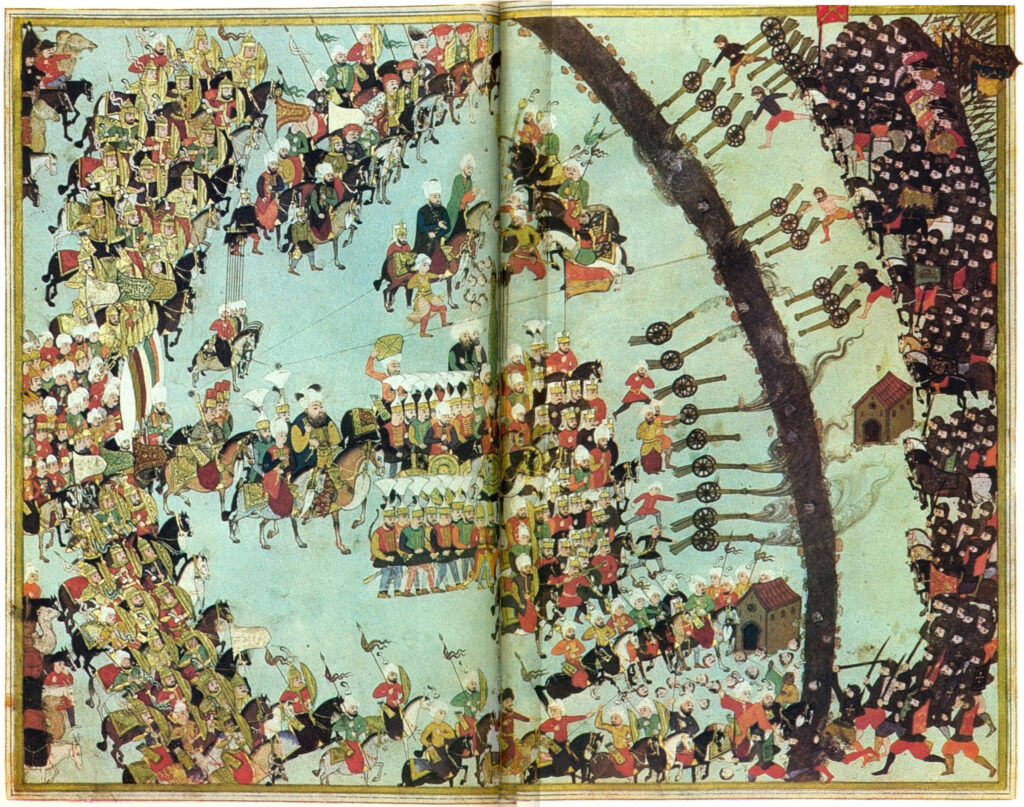
Source Unknown – The uploader's own work, scanned by Szilas from Turkish Miniatures by Géza Fehér, Corvina 1978, Budapest




Comments are closed